Teachers Village: The Promise and Limits of Place-Based Workforce Housing
I. Introduction
Across the United States, the affordable housing crisis has reached unprecedented heights, leaving many full-time professionals unable to live in the communities where they work. As housing prices soared in the early 2000s, middle-income earners—including teachers, police officers, and nurses—found themselves increasingly priced out of the neighborhoods they served. In response, the emergence of “workforce housing” programs sought to address this growing gap, recognizing that stable cities depend on retaining essential workers who can afford to live in the communities they serve (Parlow, 2015). Among these essential workers, K-12 teachers are particularly affected. Teachers play a critical role in shaping the future workforce, yet many are unable to afford housing near the schools where they teach. This reality has forced numerous educators to endure long commutes or take on multiple jobs to make ends meet (Colón-Bermúdez et al., 2025). The consequences extend beyond individual hardship: school systems struggle to retain teachers, which hurts neighborhood stability and disrupts students’ learning.
The growing dissatisfaction among teachers underscores the urgency of this issue. During the 2022-2023 school year, only twenty-four percent of teachers were satisfied with their weekly hours, compared with fifty-five percent of the general working population (Steiner et al., 2023). Moreover, pay dissatisfaction is widespread, with only thirty-four percent of teachers reporting that they felt their base salary was adequate. Teachers seeking higher pay desired an average increase of $17,000, with those in high cost-of-living areas asking for even more. Although compensation remains one of the strongest predictors of turnover, most school districts lack the financial flexibility to meaningfully adjust salaries (McKinsey & Company, 2023). At the same time, the flow of new teachers into the profession is declining at an alarming rate. Between 2008-2009 and 2018-2019, enrollment in traditional teacher preparation programs fell by almost one-third, with especially steep declines in high-need fields such as special education, mathematics, and science (Lamboy, 2023). Given the complexity of these challenges, coordinated stakeholder action is essential. As Lamboy (2023) argues, local, state, and federal leaders must work together to make the teaching profession more attractive and sustainable for prospective teachers.
One promising approach to addressing both affordable housing and teacher retention challenges is the Teachers Village model, which targets a specific professional group: early childhood and K-12 educators. First implemented in Newark, New Jersey, Teachers Village represents a place-based, mixed-use development strategy designed to tackle the affordable housing crisis. This model provides affordable housing for teachers while partnering with local schools and small businesses, helping strengthen the community. With a subsequent adaptation in Hartford, Connecticut, Teachers Village provides educators with affordable housing close to the schools they teach at while simultaneously promoting neighborhood revitalization (Morgan, 2020).
This essay examines the Teachers Village model, a workforce housing initiative designed to alleviate one of the most persistent stresses facing educators: the high cost of housing. I conducted an extensive literature review drawing on peer-reviewed journal articles published in the Journal of Affordable Housing & Community Development Law and The New Educator. Search terms included “Teachers Village,” “teacher workforce housing,” “affordable housing for educators,” and “teacher retention.” In addition to academic literature, I analyzed policy and research reports from organizations such as McKinsey & Company and Brookings. I also utilized official institutional sources, including information from the RBH Group. Finally, I incorporated local and national media coverage from outlets such as Hartford Business Journal and The Wall Street Journal to understand public reception. This multi-source approach allowed for a comprehensive understanding of how Teachers Village differs from other workforce housing projects. Using Newark, the site of the model’s origin, and the subsequent adaptation in Hartford, as case studies, this essay also evaluates how each city’s unique context shapes implementation. Ultimately, this essay assesses whether Teachers Village offers a viable pathway for cities seeking to enhance housing affordability and long-term retention among educators.
II. Teachers Village Newark: Leveraging Public-Private Partnerships to Support Educators
The 2012 groundbreaking of Teachers Village in Newark, New Jersey, marked the launch of a visionary mixed-use development. The ceremony drew prominent figures, including Newark Mayor Cory Booker, Lloyd Blankfein of Goldman Sachs, Eric Schmidt of Google, and Nicolas Berggruen of Berggruen Holdings, underscoring the high-profile nature of the public-private partnerships driving the project. With Goldman Sachs serving as an investor and Berggruen Holdings as a key partner, the initiative exemplifies a collaborative approach that leverages private capital to advance community-focused urban development (The Wall Street Journal, 2012). Developed by Ron Beit of the RBH Group and designed by Newark-born architect Richard Meier & Partners Architects, the project transformed former parking lots into a five-block development that includes 204 affordable rental units marketed to educators, three charter schools, a daycare center, and 65,000 square feet of a variety of retail establishments designed to revitalize the city’s downtown (Davis, 2017).

The development emerged from a pressing local issue: only fifteen percent of Newark’s teachers lived in the city, which not only strained educators’ finances but also weakened their connection to the community they served (Davis, 2017). Seventy percent of the 204 residential units were reserved for teachers at below-market rates (Davis, 2017). By providing below-market-rate housing to teachers and integrating schools and retail within the same development, Teachers Village Newark sought to alleviate commuting burdens, improve teacher retention, and stimulate local economic activity through place-based, community-oriented design. The Teachers Village model is committed to making urban living viable for middle-income professionals while spurring investment in surrounding neighborhoods. Unlike traditional affordable housing, which generally serves income-qualified populations, Teachers Village specifically targets educators: middle-income earners who often make too much to qualify for low-income housing but too little to afford rent at market rates (Davis, 2017). This occupational focus fills a crucial gap, demonstrating how affordable housing can be used strategically to support essential workers and stabilize communities.
By redeveloping seventy-seven parcels of blighted land into six entirely new buildings across five blocks at a total cost of approximately $150 million, Teachers Village Newark represents a large-scale investment in both physical infrastructure and community revitalization. The project offers “smart classrooms,” providing spaces where residents can pursue after-hours classes in arts, technology, and design. These learning opportunities promote a holistic environment where teachers can thrive both professionally and personally. Teachers Village Newark embodies a “Live, Play, Learn” philosophy, offering residents access to a range of high-quality amenities, including fitness centers, laundry facilities, and recreational spaces within a walkable downtown setting (Teachers Village, n.d.). Furthermore, the inclusion of local women-owned and minority-owned small businesses further reflects RBH Group’s commitment to inclusive economic development. Fifty-seven percent of retailers are women-owned, sixty-four percent are minority-owned, and forty-four percent are Newark-based (Morgan, 2020). This focus on inclusive economic development is closely tied to the financial structure of RBH Group’s projects.
Teachers Village Newark leveraged substantial public subsidies, including Urban Transit Hub Tax Credits, a New Jersey state incentive program for urban redevelopment. This raises important questions about long-term financial sustainability and replicability in cities without similar incentives (Davis, 2017). RBH Group leveraged a complex public-private partnership with investors, lenders, and municipal, state, and federal support. In addition, RBH Group’s use of Opportunity Zones, created under the 2017 Tax Cuts and Jobs Act, enabled the company to expand the model to other cities such as Hartford by attracting private investors through tax incentives (RBH Group, n.d.). These Opportunity Zone investments have enabled RBH Group to deploy over $500 million toward sustainable, LEED-certified, transit-oriented projects that integrate workforce housing with broader community development goals (RBH Group, n.d.). Overall, by leveraging private capital for socially responsible initiatives, the model demonstrates how financial incentives can support public good while fostering neighborhood revitalization.
The project’s long-term impact on downtown Newark demonstrates the potential of place-based development to drive both social and economic renewal. Once characterized by vacant lots and underutilized spaces, the area has been transformed into a thriving community that attracts educators, entrepreneurs, and families (The Wall Street Journal, 2012). However, Teachers Village’s reliance on large-scale public-private partnerships exemplifies its complexity. While the project’s success has inspired adaptations in other cities, each implementation must navigate distinct local housing markets and community needs. Balancing financial viability with affordability remains a persistent challenge, particularly as workforce housing initiatives in urban areas risk drifting toward gentrification if affordability measures are not preserved (Davis, 2017).
III. Expanding the Teachers Village Model in Hartford, Connecticut
Teachers Village Hartford opened in the spring of 2019, as part of broader efforts to revitalize the city’s downtown. Hartford’s unique context, with high poverty rates, struggling public schools, and neighboring affluent suburban counties, creates stark socioeconomic disparities that make redevelopment projects such as Teachers Village especially significant. Statewide policy under Connecticut General Statute 8-30g requires each municipality to maintain at least ten percent of units as affordable housing. Developers are allowed to challenge local zoning in towns that fail to meet this goal (Connecticut General Assembly, 2025).
Located at 370 Asylum Street in downtown Hartford, Teachers Village revitalized a property built in the early 1980s that had sat vacant for nearly twenty years before its transformation into modern studios, one-bedroom, and two-bedroom apartments. The $20 million renovation, about one-seventh of the total cost for Teachers Village Newark, brought the site back into productive use (Cooper, 2019). The development prioritizes teacher occupancy, with 60 to 70 percent of units leased to Hartford educators. Thirty percent of units are designated as affordable, while the remaining seventy percent are rented at market rates (Cooper, 2019). In 2019, monthly rents started at $800 for one-bedroom units and $1,200 for two-bedroom units (Cooper, 2019). Beyond residential units, Teachers Village Hartford includes shared amenities such as a fitness room, laundry facilities, and limited covered and indoor parking.
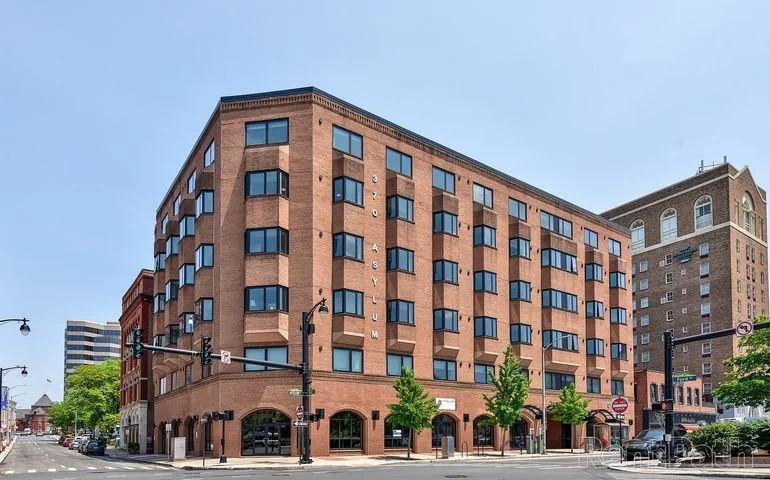
The development benefited from public-private collaboration, with contributions from the City of Hartford, the Connecticut Housing Finance Authority, the Connecticut Department of Housing, Prudential Social Investment Group, Goldman Sachs Urban Investment Group, and affordable housing developer Community Solutions Inc. (Cooper, 2019). Additionally, Teachers Village Hartford illustrates the role of state-level intervention through the Capital Region Development Authority (CRDA), an entity established by the Connecticut General Assembly on June 15, 2012. CRDA is tasked with promoting economic growth and attracting new investment in the Hartford region. In the case of Teachers Village Hartford, CRDA provided a $4 million loan to the development (Capital Region Development Authority, 2019). Between 2012 to 2025, Michael Freimuth served as the Executive Director of CRDA, leading the efforts in revitalizing downtown Hartford. According to Freumuth, CRDA contributed roughly $60,000 per unit, aligning with its typical support of about 20% of project costs, and provided favorable financing at a 1% interest rate, below its usual 3% loans. The project drew on nine different funding sources, reflecting its financial complexity, and CRDA allowed the developer to exceed the standard 20% affordability cap, raising it to 30%, which was intended to attract teachers and other residents with similar income (personal communication, November 10, 2025). Leasing took longer than expected, with over seven years to fully stabilize due to construction delays and the impacts of COVID-19, compared with the typical three-to-five-year timeframe. Despite these challenges, the project ultimately increased property values, achieved financial stability, and contributed to neighborhood revitalization, fulfilling CRDA’s public-benefit objectives.
IV. Conclusion: Lessons from the Teachers Village Model
The Teachers Village model shows how workforce-targeted affordable housing can support teachers while strengthening communities. By providing affordable units near schools, it eases financial pressures, boosts local economic activity, and helps stabilize the teacher workforce. First implemented in Newark, New Jersey, the model has since been adapted in Hartford, demonstrating its potential to fit different urban contexts. The Newark and Hartford projects highlight how variations in scale, cost, and local conditions, particularly differences in funding structures and housing policy, shape the execution and impact of such developments. The model’s success is influenced by factors such as land availability, development costs, zoning regulations, and community engagement. Its reliance on public subsidies and tax-exempt bonds underscores the challenges of expanding workforce housing in high-demand cities. Equity concerns also emerge, as roughly seventy percent of units in both locations are reserved for early childhood and K–12 educators. While this focus emphasizes the societal value of teaching and directly addresses the pressing problem of teacher retention, it limits access for other essential workers. Nevertheless, targeting educators is justified within this framework, as teacher attrition is a well-documented challenge that significantly affects schools and student outcomes. Overall, Teachers Village illustrates how affordable housing can be strategically linked to workforce stability and community development. Although promising, the model requires careful adaptation to each city’s social, economic, and political landscape.
Bibliography
Bryant, J., Ram, S., Scott, D., & Williams, C. (2023). K–12 teachers are quitting. What would make them stay? McKinsey & Company. https://www.mckinsey.com/industries/education/our-insights/k-12-teachers-are-quitting-what-would-make-them-stay.
Capital Region Development Authority. (2019). Teachers Village. https://crdact.net/project/housing/teachers-village/.
Connecticut General Assembly. (2025). Conn. Gen. Stat. § 8‑30g. Chapter 126a: Affordable housing land use appeals. https://www.cga.ct.gov/2025/pub/chap_126a.htm.
Cooper, J. (2019). Downtown Hartford’s Teachers Village apartments nearly fully leased.
Hartford Business Journal. https://hartfordbusiness.com/article/downtown-hartfords-teachers-village-apartments-nearly-fully-leased/
Davis, P. (2017). Affordable housing solutions for educators. Donnell-Kay Foundation. http://dkfoundation.org/assets/img/DK-021-Affordable-Housing-Solutions-for-Educators_FA.pdf.
Lamboy, E. M. (2023). Introduction: On Teacher Shortage. The New Educator, 19(3), 169–174. https://doi.org/10.1080/1547688X.2023.2236383.
Morgan, L. P. (2020). How Newark, N.J.’s Teachers Village is building a community around education, affordability, and small business development. Brookings. https://www.brookings.edu/articles/how-newark-n-j-s-teachers-village-is-building-a-community-around-education-affordability-and-small-business-development/.
Parlow, M. J. (2015). Whither Workforce Housing? Journal of Affordable Housing & Community Development Law, 23(3–4), 373–392. https://www.jstor.org/stable/26408146
RBH Group. (n.d.). RBH Group. https://www.rbhgrp.com/.
RBH Group. (n.d.). Teachers Village. https://www.rbhgrp.com/teachersvillagenewark.
Steiner, E. D., Woo, A., & Doan, S. (2023). All work and no pay — Teachers' perceptions of their pay and hours worked: Findings from the 2023 State of the American Teacher Survey. RAND Corporation. https://www.rand.org/pubs/research_reports/RRA1108-9.html.
Viewing Newark as a 'Blank Canvas'. (2012). The Wall Street Journal. https://www.wsj.com/articles/SB10001424052970203824904577213393228484230.
