College Students’ Attitudes Toward Volunteering
College students volunteer at high rates, yet little is known about the factors that shape their decisions to participate in community-oriented work. Existing research often frames youth volunteerism as an act of service, but for many students it also reflects emerging understandings of community needs, civic identity, and personal responsibility. Students’ decisions—whether driven by personal interest, social networks, or perceived community needs—reveal how emerging adults interpret their roles in addressing public challenges. At the same time, the barriers students encounter often mirror the obstacles that limit civic participation more broadly. Time constraints, limited awareness of opportunities, and inflexible schedules frequently shape how and whether students get involved. Understanding these dynamics provides a window into how civic habits form and how engagement pathways can be strengthened early in adulthood.
To investigate these patterns, a self-administered online survey was distributed to a total of 32 Cornell University undergraduates between April and November 2025. The demographic profile of respondents provides context for the sample. Most participants identified as female (78.1%), with a smaller proportion identifying as male (18.8%) or preferring not to say (3.1%). In terms of ethnicity, 43.8% respondents identified as White, while the 56.2% respondents identified as people of color.
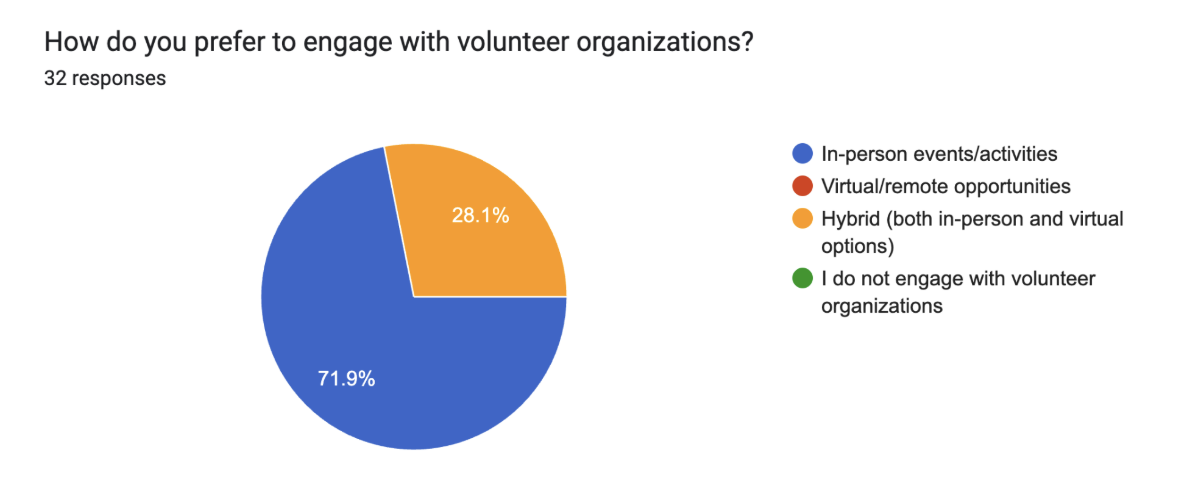
The survey results reveal that students have a strong intrinsic interest in volunteering, driven primarily by helping others, creating community impact, and aligning with personal values. Nearly all respondents indicated that they volunteer occasionally or more, yet their participation remains constrained by time pressures and irregular schedules. Students overwhelmingly prefer in-person volunteer work, but they consistently emphasized the importance of flexible scheduling, hybrid options, and opportunities that fit easily into their academic routines.
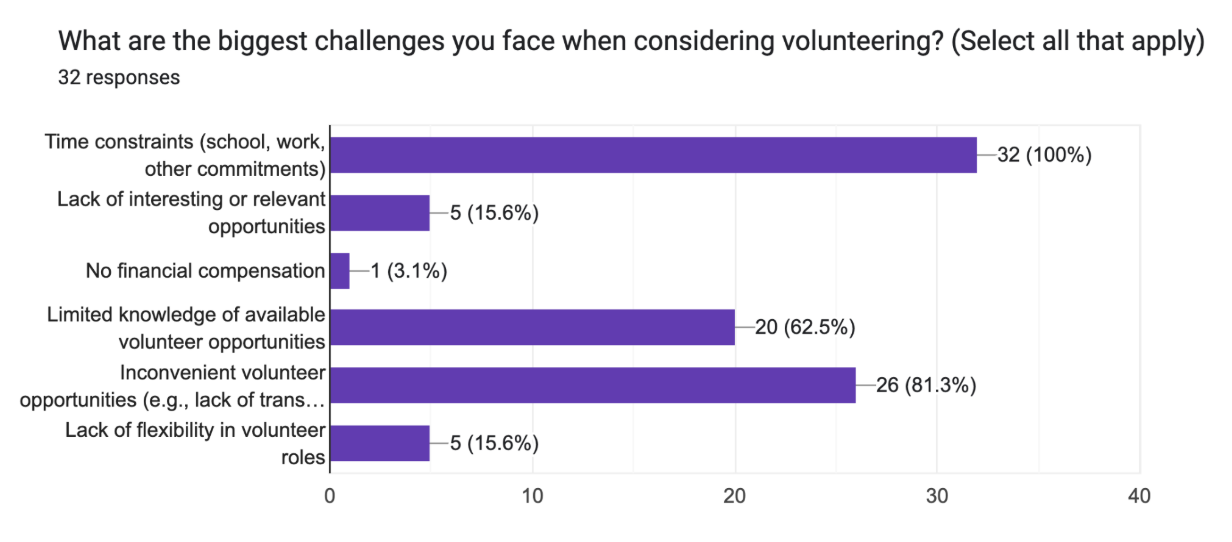
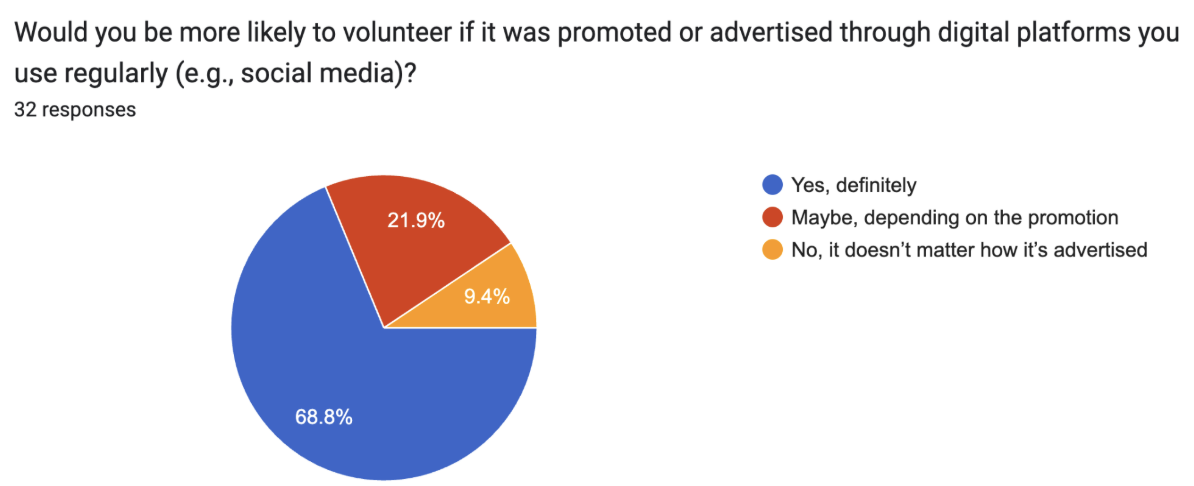
All respondents indicated that value alignment mattered to them, with 46.9% rating it as “very important” and 53.1% rating it as “somewhat important.” One of the most significant findings is that students report wanting to volunteer but frequently feel disconnected from the information needed to do so. More than half said they often do not know where to look for opportunities, and nearly 70 percent said they would volunteer more frequently if organizations promoted their opportunities on digital platforms, such as Instagram. There is not a lack of interest, but rather there is a lack of visibility, which suggests a need for clearer, more accessible communication from nonprofit organizations.
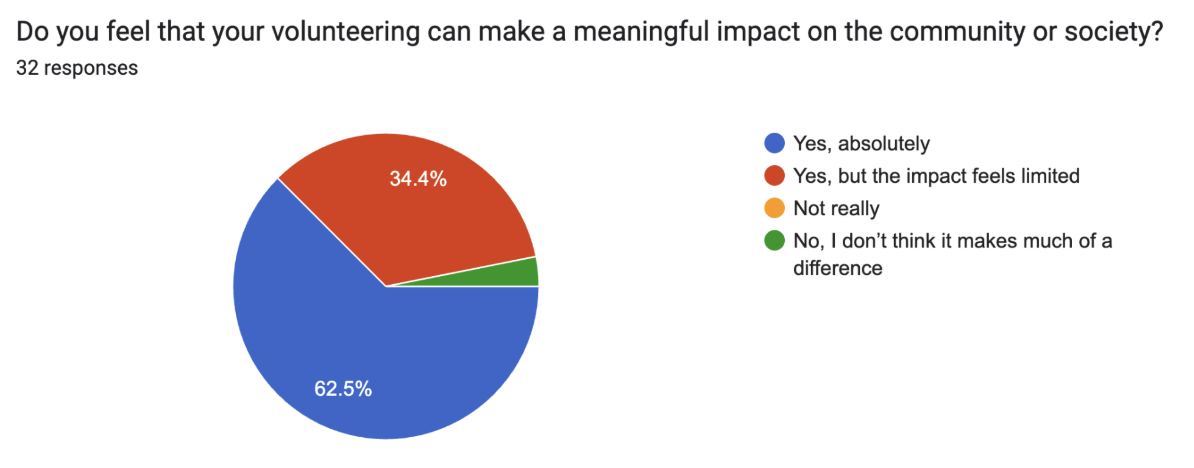
Another key insight involves the role of perceived impact. A significant portion, 37.5%, expressed uncertainty or felt that their contributions had limited effect. This reflects a growing generational expectation that organizations should clearly communicate the outcomes of volunteer work, provide transparency about how tasks connect to broader goals, and offer tangible ways for volunteers to understand the value of their efforts. Students indicated that they are more likely to volunteer when they can see how their work fits into a larger mission and when organizations provide consistent updates about progress or community outcomes.
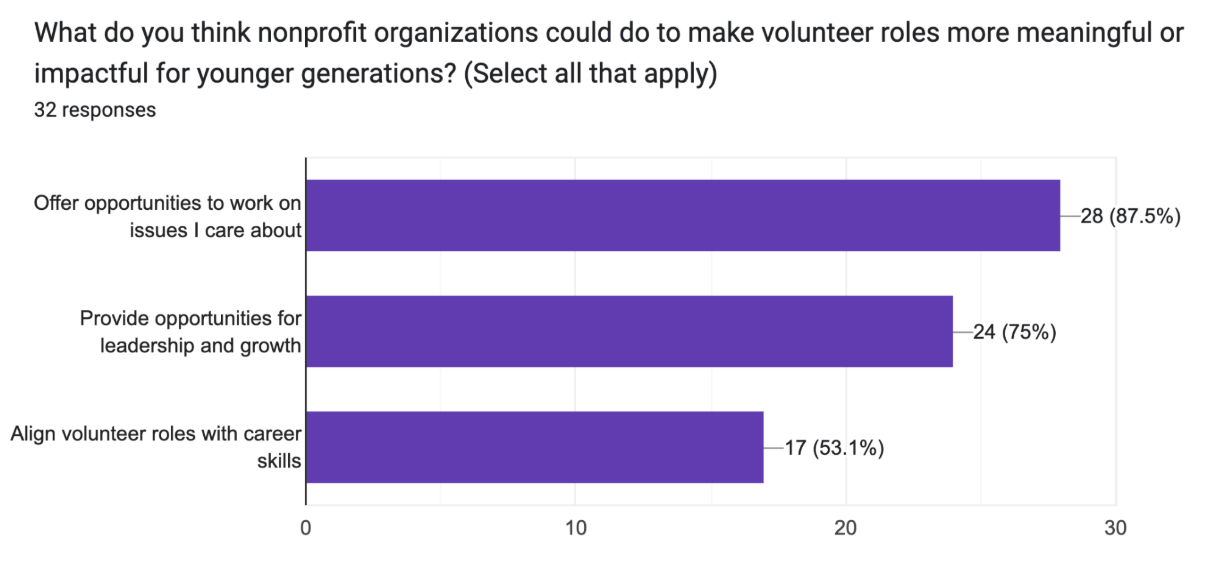
Overall, the findings suggest that student interest in volunteerism is strong. However, students need opportunities that are flexible, meaningful, and well-promoted. For nonprofits, this requires rethinking how volunteer roles are structured, communicated, and supported—creating shorter shifts, offering hybrid or skill-based roles, communicating impact clearly, and using digital platforms for outreach.
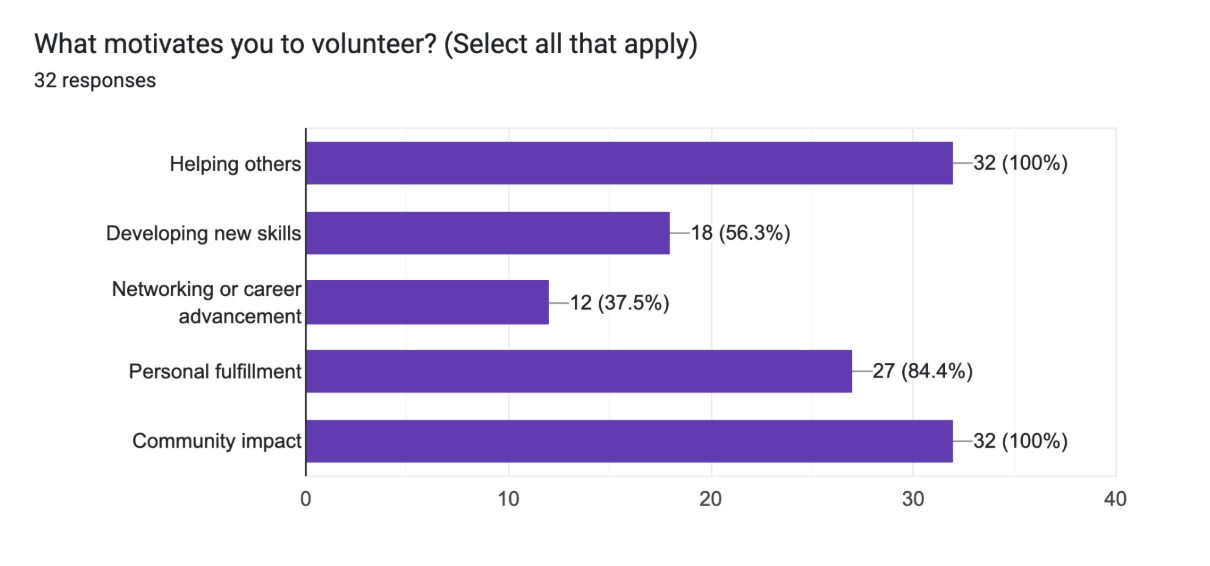
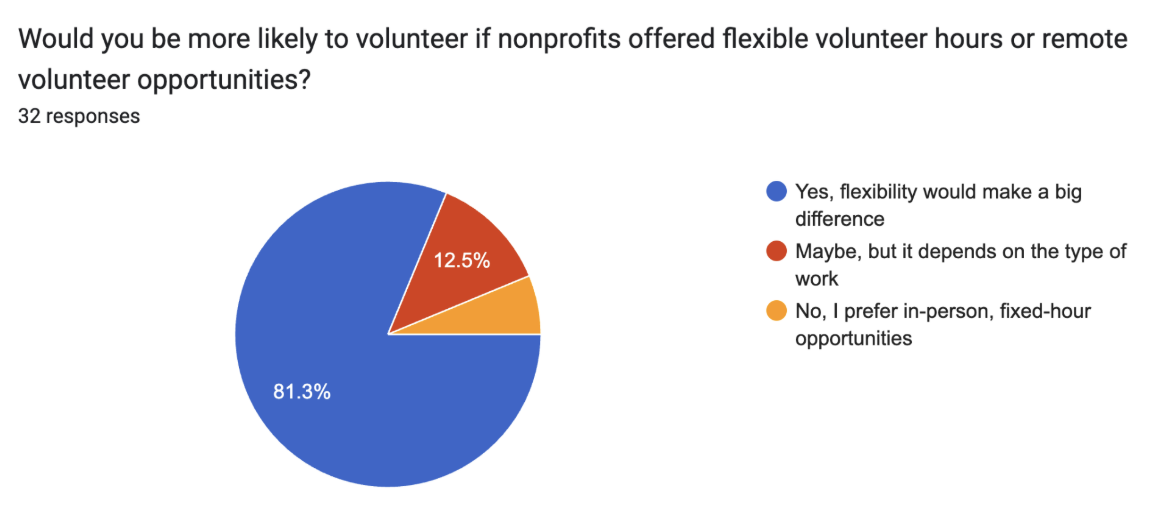
The patterns revealed point to a broader reality: college students are eager to participate in social-impact work, yet their engagement is shaped by structural and informational barriers that organizations must address intentionally. Because students represent the next generation of civic leaders and community advocates, designing volunteer opportunities that fit students’ schedules and everyday responsibilities is essential for cultivating a robust culture of engagement that supports both community needs and the personal development of young adults.
